
Gospel of John: Questions and Answers – A Comprehensive Guide
Discover insightful questions and answers exploring the Gospel of John, enhanced by readily available PDF sermon outlines and study guides for deeper understanding.
The Gospel of John stands apart, presenting Jesus Christ not merely as a historical figure, but as the divine Logos – God’s Word made flesh. Unlike the synoptic Gospels, John emphasizes theological depth and symbolic meaning, offering a unique perspective on Jesus’ identity and mission. Exploring this Gospel requires careful consideration of key terms like zoe (life) and the powerful symbolism of light overcoming darkness.
Numerous resources, including free PDF sermon outlines from sources like Mark A. Copeland, facilitate deeper study. These materials, alongside audio and video sermons, provide a structured approach to understanding John’s intricate narrative and profound theological insights. Prepare to delve into a Gospel that invites belief and reveals Jesus as the Messiah, the Son of God, and the Son of Man.
Understanding the Unique Perspective of John
John’s Gospel differs significantly from Matthew, Mark, and Luke, focusing less on parabolic teaching and more on extended discourses revealing Jesus’ divine nature. It presents a carefully selected collection of “signs” – miracles intended to evoke belief in Jesus as the Christ. This perspective emphasizes Jesus’ pre-existence, as highlighted in John 1:1-2, and His role in creation (John 1:3-5).
Studying John benefits greatly from resources like PDF sermon outlines, offering structured exploration of these unique themes. Understanding the pattern of acceptance and rejection, where revelation clarifies for believers but deepens misunderstanding for others (John 9:39), is crucial. These readily available study aids unlock John’s theological richness, revealing Jesus’ self-identification and the promise of the Holy Spirit.
Key Themes in the Gospel of John
Central themes in John’s Gospel include the divinity of Jesus Christ, eternal life offered through belief, and the revealing of God’s glory. The concepts of “Logos” (Word) and “Zoe” (life) are foundational, contrasting with mere “Bios” (existence). Light overcoming darkness symbolizes spiritual truth dispelling ignorance. Jesus’ titles – “Only Begotten,” “Son of God,” and “Son of Man” – reveal His unique relationship with the Father.
Exploring these themes is enhanced by utilizing PDF study guides and sermon outlines. The introduction of the Holy Spirit in John 14, as Advocate and Helper, is a key element. Understanding the pattern of acceptance and rejection, and reflecting on passages like John 1:19-2:11, deepens comprehension.

The Prologue (John 1:1-18) – Core Concepts
Explore the foundational verses of John, focusing on the “Logos,” eternal life, and the battle between light and darkness, aided by PDF resources.
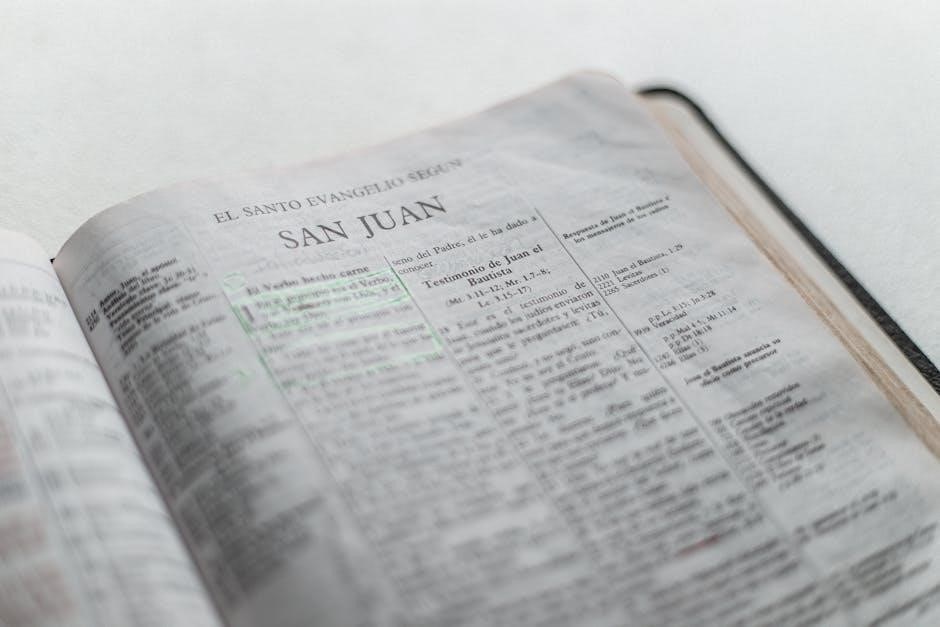
The Significance of “Logos” in John 1:1
Understanding the term “Logos” is crucial to grasping John’s opening. It transcends simple translation, representing God’s divine reason, word, and expression. This wasn’t a created entity, but existed with God and was God, pre-existing Mary’s conception.
Copeland’s outlines emphasize Christ’s pre-existence, aligning with scriptural support beyond John’s Gospel. The “Logos” signifies God’s active self-revelation to humanity.
PDF study materials can further illuminate this concept, detailing how the “Logos” became flesh in Jesus Christ. Exploring this reveals the profound implications for salvation and our relationship with the divine. Consider its significance for understanding Jesus’ identity and purpose, utilizing available sermon notes for deeper insight.
Exploring “Zoe” (Life) vs. “Bios” (Mere Existence)
John distinguishes between “zoe” – divine, eternal life – and “bios” – physical, earthly existence. “Bios” is limited by time and mortality, while “zoe” represents a quality of life found in fellowship with God, offered through belief in Jesus.
This distinction is central to understanding John’s message of eternal life. PDF sermon outlines often highlight this contrast, emphasizing that Jesus doesn’t merely prolong “bios,” but imparts “zoe.”
Study guides can help unpack how receiving “zoe” transforms one’s perspective and purpose. It’s a life characterized by abundance and connection to the divine source, a concept explored in detail within available expository teachings and notes.
The Symbolism of Light and Darkness
Throughout John’s Gospel, light symbolizes God’s presence, truth, and revelation, while darkness represents ignorance, sin, and separation from God. Jesus is presented as the “Light of the World” (John 8:12), offering illumination and exposing hidden realities.
PDF study materials frequently analyze this symbolism, showing how accepting Jesus means stepping from darkness into light. This isn’t simply about physical visibility, but spiritual understanding.
Sermon outlines often connect the imagery to the pattern of acceptance and rejection; those who embrace the light receive further clarity, while those who cling to darkness remain in misunderstanding. Expository teachings delve into the profound implications of this dualism.

Jesus’ Early Ministry & Signs (Chapters 1-4)
Explore Jesus’ initial miracles and teachings in John 1-4, aided by PDF resources offering detailed questions and answers for insightful study.
The Wedding at Cana: Jesus’ First Sign (John 2:1-11)
Delve into Jesus’ first public miracle at Cana, transforming water into wine, a pivotal moment revealing His divine glory. Utilize accompanying PDF study materials containing probing questions and comprehensive answers to unlock deeper meaning.
Consider the significance of Mary’s request and Jesus’ initial reluctance. How does this sign demonstrate faith and obedience? Explore the symbolism of wine representing joy and the new covenant. PDF resources provide detailed analysis of the servants’ role and the wedding guests’ reaction;
Further investigation, through questions and answers in PDF format, reveals how this miracle foreshadows Jesus’ power to transform lives and offer abundant life. Understand the implications for believers today, and how this event establishes Jesus’ authority.
The Cleansing of the Temple: A Demonstration of Authority (John 2:13-22)
Examine Jesus’ bold act of cleansing the Temple, overturning tables and driving out merchants, a powerful display of His authority and zeal. Access PDF study guides offering insightful questions and detailed answers to understand the historical and spiritual context.
Explore the reasons behind Jesus’ anger – the Temple transformed into a den of robbers. How does this event relate to Old Testament prophecies? PDF resources provide analysis of the Jewish leaders’ challenge to Jesus’ authority and His enigmatic response regarding His body.
Through focused questions and answers within the PDF materials, uncover the symbolic meaning of the Temple representing Jesus’ own body, foreshadowing His death and resurrection. Reflect on the implications for worship and reverence today.
Nicodemus and the New Birth (John 3:1-21)
Delve into the profound conversation between Jesus and Nicodemus regarding the necessity of being “born again.” Utilize PDF study guides containing crucial questions and comprehensive answers to unpack this pivotal concept. Explore Nicodemus’ initial confusion and Jesus’ patient explanation of spiritual rebirth.
PDF resources offer detailed analysis of the symbolism of water and the Spirit, clarifying the means by which one enters the Kingdom of God. Investigate the questions surrounding Jesus’ statement about the Son of Man being lifted up, and its connection to salvation.
Through insightful questions and answers, understand the contrast between earthly and heavenly perspectives. Discover how John 3:16, a cornerstone of Christian belief, is rooted in this dialogue, readily available in PDF format.

Key Titles & Claims of Jesus in John
Explore Jesus’ divine self-identification – “Only Begotten,” “Son of God,” and “Son of Man” – using PDF questions and answers for clarity.
“Only Begotten of the Father”: Interpretation and Meaning
Delving into John’s unique phrasing, “Only Begotten of the Father,” requires careful consideration. This isn’t a literal birth, but signifies a unique, eternal relationship with God, existing “in the beginning” (John 1:1-2). PDF study materials often highlight this pre-existence, contrasting it with Jesus’ earthly birth through Mary.
Questions arise: Does “begotten” imply a point in time when Jesus began to exist? Scholars generally agree it denotes a unique origin, not a creation. It emphasizes Jesus’ distinctiveness and intimate connection to the Father. Answers found in comprehensive PDF guides explore how this title underscores Jesus’ divine nature and authority. Understanding this claim is crucial for grasping John’s portrayal of Jesus as the divine Word made flesh.
“Son of God”: Implications and Significance
The title “Son of God” in John carries profound weight, extending beyond mere filial relationship. It signifies Jesus’ divine nature, equality with the Father, and unique authority. PDF resources dedicated to John’s Gospel often unpack the implications of this claim, noting its controversial reception during Jesus’ ministry.
Questions frequently addressed in study guides explore how Jewish audiences understood this title and why it was considered blasphemous by some. Answers reveal that Jesus wasn’t simply claiming a special status, but asserting His divine identity. Examining this title within the context of John’s narrative, accessible through detailed PDF outlines, illuminates the core message of the Gospel: Jesus is the Messiah, the divine revelation of God to humanity.
“Son of Man”: Understanding Jesus’ Self-Identification
Jesus’ frequent use of “Son of Man” as a self-designation in John’s Gospel is intriguing. Unlike “Son of God,” this title, rooted in Daniel 7, initially appears less overtly divine. PDF study materials highlight how Jesus employs it to subtly reveal His messianic identity and authority.
Questions within PDF sermon outlines often focus on why Jesus preferred this title. Answers suggest it allowed Him to speak of His glory and future judgment without directly claiming divinity, navigating sensitive religious contexts. Exploring this through available resources clarifies that “Son of Man” ultimately points to Jesus’ humanity and His divine power, particularly concerning His coming exaltation and role as judge. Deeper study, facilitated by these PDF guides, unveils the nuanced brilliance of Jesus’ self-revelation.
The Samaritan Woman at the Well (John 4:1-42)
Explore this pivotal encounter via PDF resources, uncovering Jesus’ revelation as the Messiah and the “living water” metaphor for eternal life.
The Gift of Living Water: A Metaphor for Eternal Life
Delve into the profound symbolism of “living water” as presented to the Samaritan woman, a powerful metaphor for eternal life offered by Jesus. PDF study materials and sermon outlines illuminate how this transcends physical thirst, representing a spiritual fulfillment only found in Him.
Consider how Jesus intentionally uses this imagery to reveal His divine identity and offer a gift surpassing anything she could comprehend. Explore questions surrounding the nature of this “water” and its lasting impact. Resources available in PDF format provide detailed analysis of John 4:10-14, aiding comprehension of this crucial exchange;
Utilize these resources to understand how accepting Jesus satisfies a deeper longing within humanity, offering a continuous source of spiritual nourishment and everlasting life. This concept is central to John’s Gospel and is thoroughly examined in accompanying study guides.
Jesus Reveals Himself as the Messiah
Examine the pivotal moment in John 4 where Jesus definitively reveals Himself as the Messiah to the Samaritan woman, a groundbreaking disclosure challenging societal norms. PDF sermon outlines and study guides provide context for understanding the significance of this revelation.
Analyze how Jesus’ statement, “I am He,” directly addresses her anticipation of a coming Messiah, prompting a shift in her understanding and the subsequent belief of her community. Explore the questions surrounding why Jesus chose to reveal this truth to a Samaritan, a group historically marginalized by Jewish society.
Utilize available PDF resources to deepen your understanding of the Messianic prophecies fulfilled by Jesus and the implications of His self-identification. This encounter demonstrates Jesus’ proactive unveiling of His identity and the power of faith-based acceptance.

The Role of the Holy Spirit in John
Delve into John’s portrayal of the Holy Spirit as Advocate and Helper, utilizing PDF study guides to explore His introduction in chapter 14.
Jesus initiates discussion of the Holy Spirit within the context of preparing His disciples for His departure, offering comfort and assurance. He promises to send another Helper – the Holy Spirit – who will abide with them forever (John 14:16-17). This introduction isn’t abrupt; it’s a natural progression as Jesus addresses their anxieties about being left alone.
Consider the significance of the Spirit being called “another” Helper (Paraclete). This suggests continuity with Jesus’ own ministry, yet also a distinct and ongoing presence. PDF resources and study guides can illuminate the nuances of this promise. The text highlights the Spirit’s role in teaching, reminding, and guiding believers into all truth.
Further exploration, aided by downloadable materials, reveals Jesus’ awareness of the disciples’ future challenges and the Spirit’s empowering role in their mission to advance the gospel.
The Holy Spirit as Advocate and Helper
John’s Gospel portrays the Holy Spirit not merely as a comforter, but as a powerful Advocate (Paraclete) who actively defends, intercedes, and empowers believers. He’s the one Jesus sends to be with them always, equipping them for a world that will often oppose the truth (John 14:16-18). This advocacy extends to convicting the world concerning sin, righteousness, and judgment.
Exploring this concept through PDF study guides reveals the Spirit’s role in guiding believers into all truth, reminding them of Jesus’ teachings, and glorifying Christ. He isn’t a replacement for Jesus, but an extension of His ministry.
Understanding the Spirit as Helper emphasizes His active involvement in daily life, providing strength, guidance, and assurance. Resources offer deeper insights into this vital relationship.

Reactions to Jesus’ Teachings & Signs
Analyze diverse responses to Jesus’ revelations in John, noting acceptance leading to clarity, while rejection deepens misunderstanding – explore PDF guides!
The Pattern of Acceptance and Rejection in John’s Gospel
Throughout John’s narrative, a compelling pattern emerges: Jesus presents a truth about Himself through a sign or teaching, eliciting varied reactions. Those who embrace the revelation receive further insight, their comprehension deepening as they draw closer to understanding. Conversely, those who reject the truth find their misconceptions solidified, spiraling further into misunderstanding.
John 9:39 explicitly states this dynamic, highlighting Jesus’ awareness of this recurring cycle. As you delve into the Gospel, consider why John intentionally emphasized this pattern. Exploring readily available PDF study resources can illuminate this crucial aspect of John’s writing.
This pattern isn’t random; it reveals a fundamental truth about the human heart and its response to divine revelation. It prompts reflection on our own willingness to accept or reject Jesus’ teachings.
Clarification for Believers, Deepening Misunderstanding for Rejecters
John’s Gospel demonstrates a fascinating principle: belief fosters clarity, while rejection breeds deeper confusion. Those who accept Jesus’ self-revelation experience a progressive unveiling of truth, their understanding refined with each encounter. Conversely, those who dismiss Him find their existing biases reinforced, leading to a hardening of their hearts and a distorted perception of reality.
This isn’t merely intellectual disagreement; it’s a spiritual dynamic. Accessing PDF study guides and sermon outlines can help trace this pattern throughout the text, revealing how Jesus responds differently to varying levels of faith.
Consider how this principle applies to your own life. Are you open to receiving further revelation, or are you clinging to preconceived notions that hinder your understanding?

Personal Application & Study of John
Utilize PDF resources, sermon outlines, and reflective questions to integrate John’s teachings into daily life, fostering spiritual growth and deeper understanding.
Reflecting on John 1:19-2:11 in Daily Life
Consider how John the Baptist’s testimony in 1:19-34 challenges our expectations of a Messiah. Do we seek a grand, powerful figure, or recognize God in unexpected forms?
Explore the significance of Jesus’ first sign at Cana (2:1-11). How does this miracle reveal His glory and initiate belief among His disciples? Reflect on faith’s growth through witnessing divine intervention.
Utilize available PDF study guides and sermon outlines to delve deeper into these passages. Ask yourself: How does Jesus’ authority, demonstrated in the temple cleansing (2:13-22), impact your understanding of worship and reverence?
Apply these reflections to your interactions, seeking opportunities to share the “living water” of faith with others, mirroring Jesus’ compassionate outreach.
Utilizing Sermon Outlines and Study Guides
Enhance your understanding of John’s Gospel with readily accessible resources. Numerous free, printable PDF sermon outlines, meticulously developed for ministry, offer structured explorations of key passages.
Leverage these outlines as a springboard for personal study or group discussions. Adapt them to your unique style, focusing on the core themes of Logos, Zoe, light, and Jesus’ divine claims.
Explore accompanying sermon notes and small group study guides, designed to foster deeper engagement with the text and facilitate meaningful conversations.
Remember Mark A. Copeland’s work, offering valuable insights into Christ’s pre-existence and the Holy Spirit’s role. These tools empower you to confidently answer questions and apply John’s message to daily life.

Resources for Further Study
Access free audio sermons (mp3), video teachings, and PDF study guides on the Gospel of John, deepening your exploration of its truths.
Availability of Audio and Video Sermons
Enhance your study of the Gospel of John with a wealth of readily available audio and video resources. Many ministries offer complete sermon series, often focusing on key themes and passages like those found in chapters 1 and 2.
These sermons frequently delve into the profound meanings of terms like “Logos” and “Zoe,” exploring Jesus’ early ministry and significant signs, such as the wedding at Cana.
Look for expository teachings that unpack the implications of Jesus’ titles – “Only Begotten of the Father,” “Son of God,” and “Son of Man.”
Furthermore, resources often provide downloadable PDF sermon outlines and notes, allowing for focused engagement with the material. These are invaluable tools for personal reflection and small group discussions.
Free Printable PDF Sermon Outlines
Access comprehensive, free PDF sermon outlines designed to facilitate a deeper exploration of the Gospel of John. These outlines, often developed by experienced preachers like Mark A. Copeland, provide a structured framework for understanding key passages, such as John 1:1-18 and chapters 1-4.
They meticulously detail the pre-existence of Christ, referencing verses like John 1:1-2, and highlight the significance of Jesus’ early ministry and miraculous signs.
Outlines often include detailed notes on themes like the “Gift of Living Water” and Jesus’ revelation as the Messiah, aiding both individual study and group discussions.
Feel empowered to utilize these resources as-is or adapt them to your personal teaching style, always remembering to give glory to God!
Small Group Study Guides Based on John
Enhance your fellowship with readily available small group study guides centered on the Gospel of John, often complementing free PDF sermon outlines. These guides facilitate engaging discussions around pivotal themes like the significance of “Logos” and the contrasting concepts of “Zoe” and “Bios.”
Explore the symbolism of light and darkness, and delve into Jesus’ early ministry, including the Wedding at Cana and the Cleansing of the Temple.
Guides encourage reflection on key titles of Jesus – “Son of God” and “Son of Man” – and analyze patterns of acceptance and rejection observed throughout John’s narrative.
Facilitate deeper understanding and application of scripture within a supportive community setting!



About the author