Article Plan: Assessing Elephant Populations ─ Answer Key PDF Focus
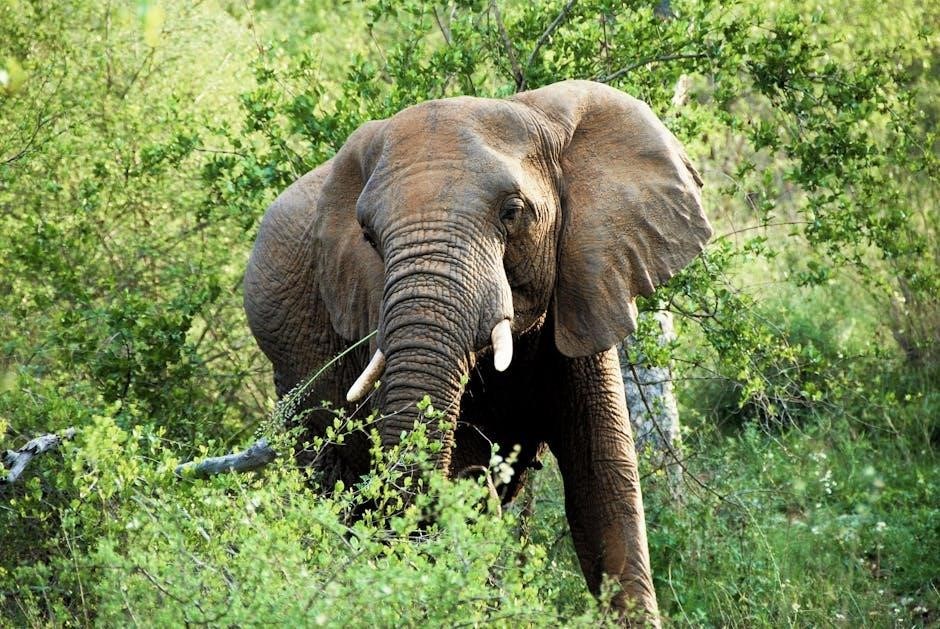
Key PDF components detail Tsavo’s abiotic factors—water‚ climate—and biotic pressures like predation‚ aiding population assessments.
Data reveals drought’s impact and tuskless elephant selection.
Assessing elephant populations is crucial for conservation‚ demanding accurate data analysis from census materials‚ particularly answer keys. These keys illuminate understanding of limiting factors – both abiotic‚ like water availability and climate patterns impacting Tsavo National Park‚ and biotic‚ such as predation and disease.
The Great Elephant Census (GEC) exemplifies large-scale assessment‚ requiring interpretation of population trends revealed through methodologies like aerial surveys and dung counts. Answer keys help decipher data‚ identifying population declines and the pressures driving them‚ including poaching and habitat loss. Understanding these elements is fundamental to effective conservation strategies and mitigating human-elephant conflict‚ ensuring the long-term survival of these magnificent creatures.
The Importance of Monitoring Elephant Populations
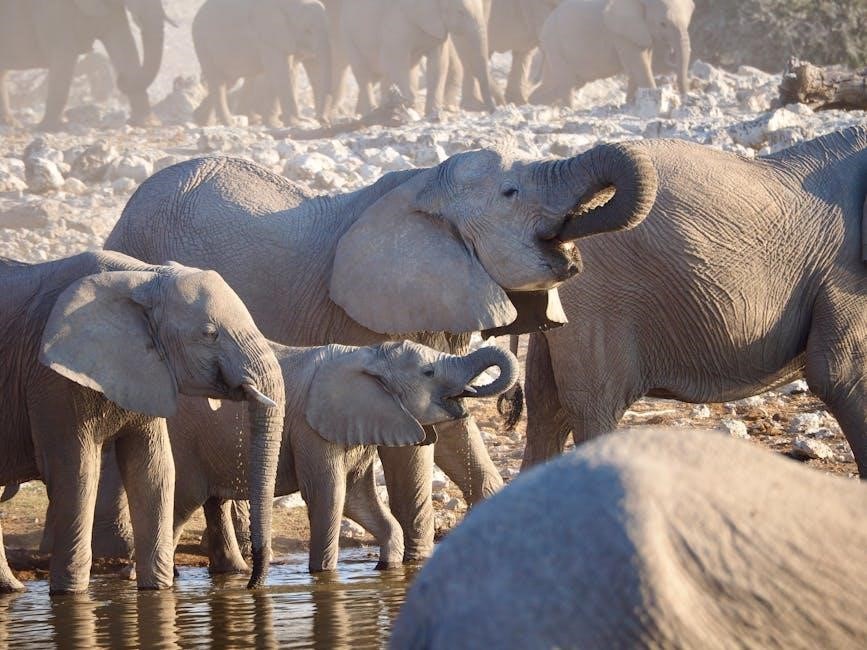
Consistent monitoring‚ guided by accurate answer keys from population assessments‚ is paramount for effective elephant conservation. Declines‚ as evidenced by census data‚ necessitate understanding underlying causes – poaching‚ habitat fragmentation‚ and increasingly‚ climate-related stressors like drought.
Analyzing population trends‚ revealed through methodologies detailed in assessment materials‚ allows for proactive intervention. Answer keys facilitate correct interpretation of data‚ highlighting critical limiting factors. This knowledge informs targeted conservation strategies‚ mitigating human-elephant conflict and safeguarding genetic diversity. Without diligent monitoring and accurate data interpretation‚ conservation efforts risk being misdirected and ultimately ineffective‚ jeopardizing elephant populations.
Historical Context of Elephant Population Decline
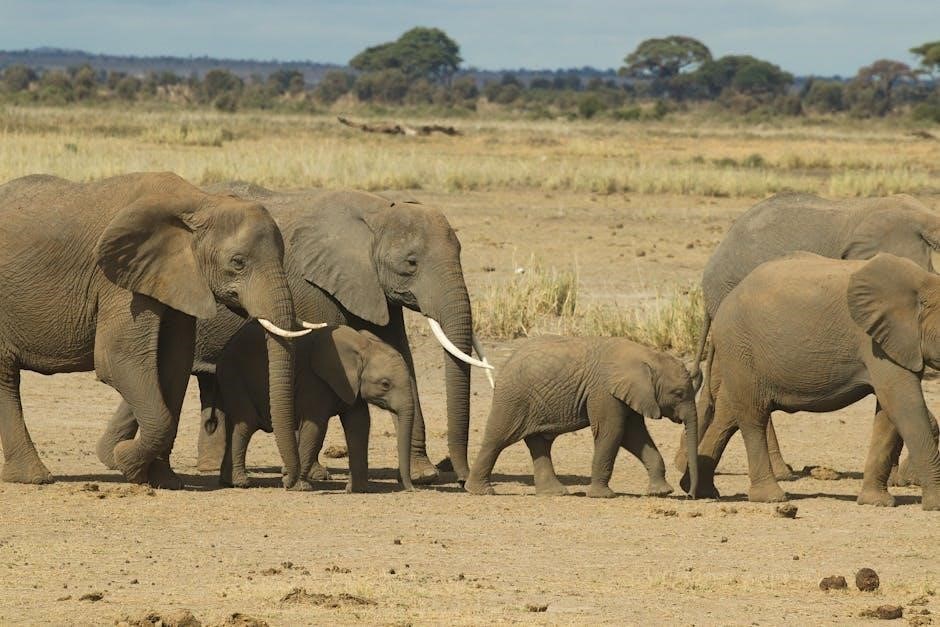
Historically‚ African elephant populations have experienced dramatic declines‚ driven primarily by the ivory trade. Early 20th-century exploitation decimated numbers‚ with unsustainable hunting practices pushing populations towards the brink. While international bans offered temporary respite‚ poaching resurged‚ particularly in the late 20th and early 21st centuries.
Assessment materials‚ and their corresponding answer keys‚ highlight this historical trajectory. Understanding past failures – and successes – is crucial for informing current conservation strategies. The Great Elephant Census data underscores the continued threat‚ while studies on tuskless elephant selection reveal evolutionary responses to poaching pressure. Accurate historical context‚ validated by assessment tools‚ is vital for effective long-term conservation.
Key Threats to African Elephant Populations
Assessment keys consistently identify poaching for ivory as a primary threat‚ driving significant population declines. However‚ the materials also emphasize habitat loss and fragmentation as equally critical concerns. Expanding human settlements‚ agricultural land‚ and infrastructure development restrict elephant movement and access to vital resources.
These threats are often interconnected; increased human-wildlife conflict arises from habitat encroachment. Answer keys frequently present scenarios requiring students to analyze the impact of these factors. The Great Elephant Census data provides quantifiable evidence of these pressures‚ while case studies‚ like Tsavo‚ illustrate localized challenges. Effective conservation requires addressing both direct (poaching) and indirect (habitat loss) threats.
4.1 Poaching for Ivory
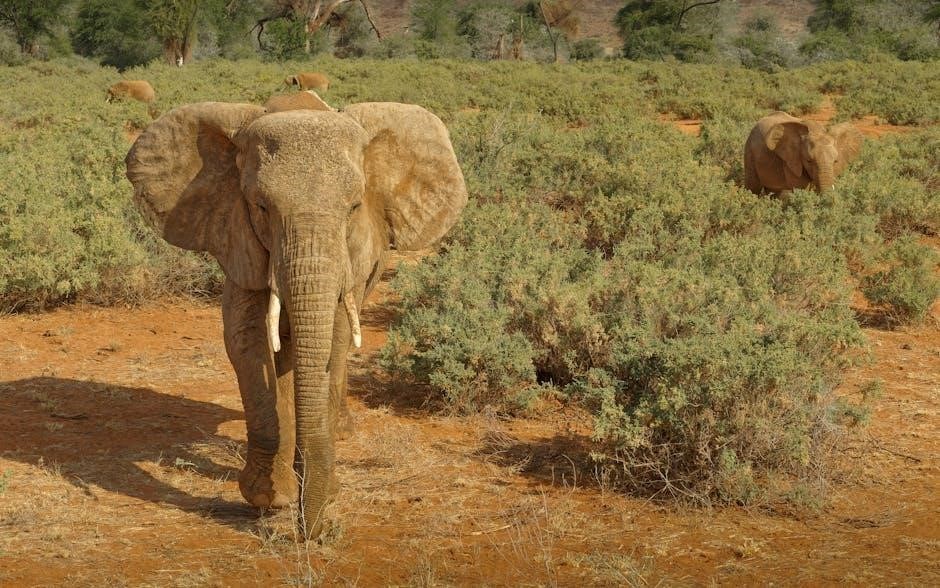
Answer keys highlight poaching as a historically devastating threat‚ directly linked to demand for ivory in international markets. Assessment materials often present data showing correlations between ivory prices and elephant mortality rates. Students are frequently asked to interpret graphs illustrating poaching intensity across different regions and time periods.
The materials emphasize that while anti-poaching efforts have seen some success‚ the illegal ivory trade persists. Questions often focus on the effectiveness of various conservation strategies‚ such as increased law enforcement and demand reduction campaigns. Understanding the socio-economic factors driving poaching is also a key component of assessment‚ prompting critical thinking about complex conservation challenges.
4.2 Habitat Loss and Fragmentation
Answer keys consistently address habitat loss as a critical factor impacting elephant populations‚ stemming from agricultural expansion‚ infrastructure development‚ and deforestation. Assessments frequently utilize maps illustrating shrinking elephant ranges and fragmented habitats‚ prompting analysis of connectivity and potential barriers to movement.
Students are often tasked with evaluating the consequences of habitat fragmentation‚ such as increased human-elephant conflict and reduced genetic diversity. Materials may present case studies demonstrating the impact of specific development projects on elephant populations. Understanding the importance of habitat corridors and protected areas is central to assessment questions‚ emphasizing holistic conservation approaches.
Methods for Assessing Elephant Populations
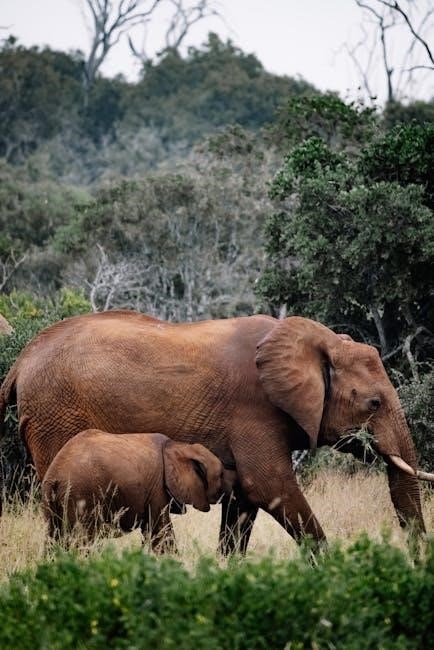
Answer keys detailing population assessment methods emphasize a multi-faceted approach. Aerial surveys‚ a traditional technique‚ are frequently featured‚ requiring students to interpret data from transect lines and estimate densities. Ground surveys‚ including dung counts‚ are presented as complementary methods‚ with keys explaining correction factors for decay rates.
Increasingly‚ answer keys highlight camera trapping as a non-invasive technique for population estimation‚ focusing on individual identification through unique ear and tusk characteristics. Students analyze images and calculate minimum population sizes. The Great Elephant Census (GEC) methodology is often included‚ stressing standardized protocols and data analysis techniques for accurate assessments.
5.1 Aerial Surveys: A Traditional Approach
Answer keys for aerial survey questions focus on identifying observer bias and correction factors. Students analyze sample transects‚ calculating elephant densities based on sightings and adjusted for detectability. Keys detail the importance of consistent flight altitude‚ speed‚ and observer training to minimize errors.
PDF assessments often include scenarios requiring students to calculate population estimates from aerial survey data‚ accounting for strip width and search effort. Questions probe understanding of limitations – visibility‚ herd size variations – and the need for repeated surveys. Emphasis is placed on interpreting data presented in tables and maps‚ demonstrating practical application of the method.
5.2 Ground Surveys and Dung Counts
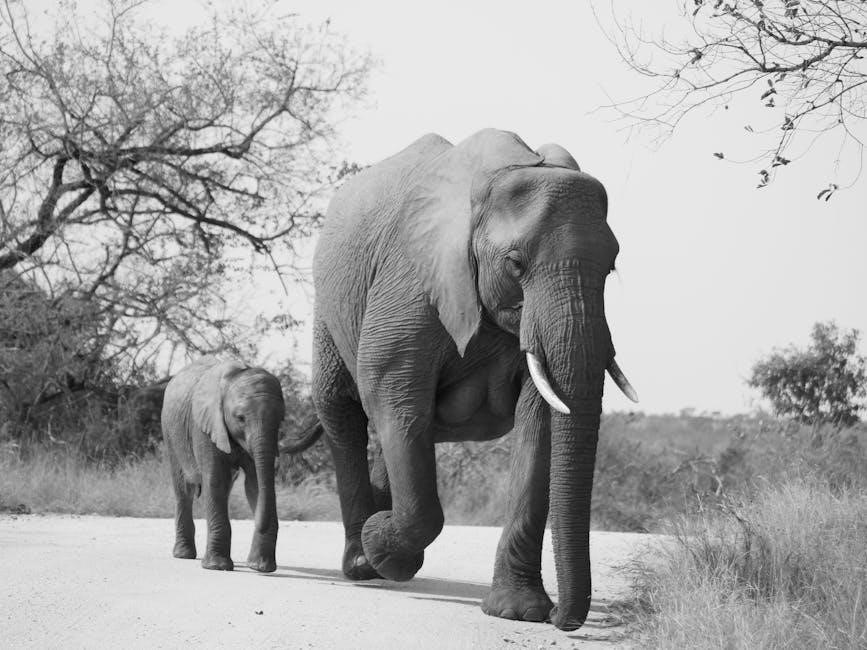
Answer key PDFs for ground surveys emphasize accurate dung pile aging techniques‚ utilizing decay rates to estimate elephant presence. Questions assess understanding of plot size‚ transect design‚ and sampling effort’s impact on accuracy. Students analyze data sets‚ calculating dung density and relating it to elephant population estimates.
Assessments frequently present scenarios requiring students to correct for observer bias and varying dung degradation rates. PDFs include diagrams illustrating proper plot placement and data recording procedures. Understanding limitations – dung removal by scavengers‚ difficulty aging in humid climates – is crucial‚ tested through multiple-choice and short-answer questions.
5.3 Camera Trapping for Population Estimation
Answer key PDFs for camera trapping focus on individual elephant identification via unique ear and tusk characteristics. Assessments test students’ ability to apply capture-recapture models‚ calculating population size based on recapture rates and time intervals. PDFs present sample images‚ requiring students to identify individuals and assess image quality for reliable data.
Questions evaluate understanding of factors influencing capture probability – camera placement‚ habitat type‚ elephant movement patterns. Assessments often include scenarios where students must account for camera failure or misidentification. Understanding the limitations – cost‚ potential for bias‚ reliance on individual recognition – is key‚ tested through critical thinking questions.
The Great Elephant Census (GEC) – Overview
Answer key PDFs related to the GEC emphasize its scope – the first pan-African elephant survey. Assessments test comprehension of the census’s goals: accurately estimating elephant numbers and distribution‚ identifying key threats. PDFs present summary data‚ requiring students to interpret population trends and map distributions.
Questions focus on the GEC’s methodology – aerial surveys‚ standardized data collection protocols. Assessments evaluate understanding of the challenges faced – logistical hurdles‚ political instability‚ data standardization. Students analyze the GEC’s findings regarding poaching and habitat loss‚ linking these threats to observed population declines. Critical thinking questions assess the census’s impact on conservation efforts.
GEC Methodology and Data Collection
Answer key PDFs detailing GEC methodology highlight standardized aerial surveys as central to data collection. Assessments probe understanding of survey design – transect lines‚ observer protocols‚ and data recording. PDFs illustrate how data on carcasses‚ dung‚ and live elephants were gathered and categorized.
Questions focus on quality control measures – duplicate observations‚ data validation‚ and statistical analysis. Assessments evaluate comprehension of the challenges in ensuring data accuracy across diverse landscapes. Students analyze how the GEC addressed biases inherent in aerial surveys. PDFs emphasize the importance of consistent methodology for reliable continent-wide comparisons and informed conservation strategies.
Analyzing Elephant Population Data
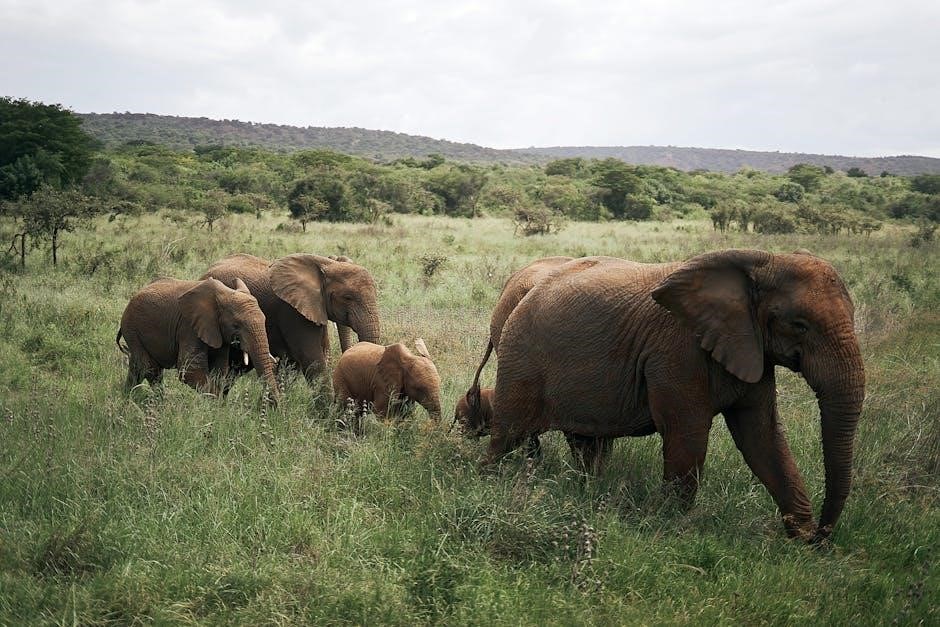
Answer key PDFs focus on interpreting population density maps derived from GEC data‚ testing students’ ability to correlate elephant distribution with geographical features. Assessments require identifying areas of high and low density‚ prompting analysis of potential influencing factors. PDFs present scenarios for recognizing population trends – increases‚ decreases‚ or stability – based on census numbers over time.
Questions challenge students to explain how statistical methods are used to estimate population size and assess confidence intervals. Assessments evaluate understanding of how data informs conservation decisions. PDFs emphasize the importance of considering limitations and potential biases when drawing conclusions from population data‚ fostering critical thinking skills.
8.1 Population Density Mapping
Answer key PDFs utilize maps displaying elephant herd locations (like Tsavo examples) to illustrate density variations. Assessments require students to calculate density – elephants per unit area – and interpret patterns. PDFs present scenarios where students correlate density with resource availability‚ such as water sources‚ testing ecological understanding.
Questions focus on identifying areas of concentrated populations versus sparse distribution‚ prompting analysis of potential causes. Assessments evaluate the ability to use map data to infer habitat quality and carrying capacity. PDFs emphasize the importance of spatial analysis in conservation planning‚ linking density maps to informed management strategies.
8.2 Identifying Population Trends (Increase/Decrease)
Answer key PDFs present census data from different time points‚ requiring students to analyze population changes – increases or decreases – over specified periods. Assessments often include graphs and charts illustrating these trends‚ demanding interpretation skills. PDFs emphasize calculating percentage change and identifying potential causes for observed fluctuations.
Questions challenge students to link population trends to factors like poaching intensity‚ habitat loss‚ or drought conditions‚ as seen in Tsavo case studies. Assessments evaluate the ability to predict future trends based on current data. PDFs highlight the importance of long-term monitoring for effective conservation‚ linking trend analysis to adaptive management strategies.
Limiting Factors Affecting Elephant Populations
Answer key PDFs thoroughly explore factors restricting elephant population growth‚ categorizing them as abiotic and biotic. Assessments focus on identifying examples – water availability (abiotic) and predation/disease (biotic) – within specific ecosystems like Tsavo. PDFs present scenarios requiring students to determine if a factor is limiting‚ and explain its impact.
Questions often involve analyzing data correlating limiting factors with population declines. PDFs emphasize understanding how drought‚ a critical abiotic factor‚ drastically reduces elephant survival rates. Assessments evaluate comprehension of complex interactions‚ such as how habitat fragmentation exacerbates the effects of biotic pressures‚ ultimately shaping population dynamics.
9.1 Abiotic Limiting Factors (Water‚ Climate)
Answer key PDFs dedicated to abiotic factors highlight water and climate as crucial determinants of elephant population health. Assessments frequently present scenarios where drought conditions directly correlate with increased mortality rates‚ demanding students identify drought as a limiting factor. PDFs emphasize understanding how reduced water availability impacts foraging‚ breeding success‚ and overall survival.
Questions often require students to describe the mechanisms through which climate change – altered rainfall patterns‚ increased temperatures – exacerbates water scarcity. PDFs may include data analysis tasks‚ interpreting graphs showing population declines alongside climatic shifts. Assessments test comprehension of how abiotic stressors interact with other factors‚ influencing elephant distribution and abundance.
9.2 Biotic Limiting Factors (Predation‚ Disease‚ Competition)
Answer key PDFs focusing on biotic limitations explore predation (primarily by lions)‚ disease outbreaks‚ and interspecies competition for resources. Assessments often present scenarios requiring students to analyze how increased lion populations impact calf survival rates‚ identifying predation as a limiting factor. PDFs detail diseases – like elephant endotheliotropic herpesvirus (EEHV) – and their devastating effects on populations.
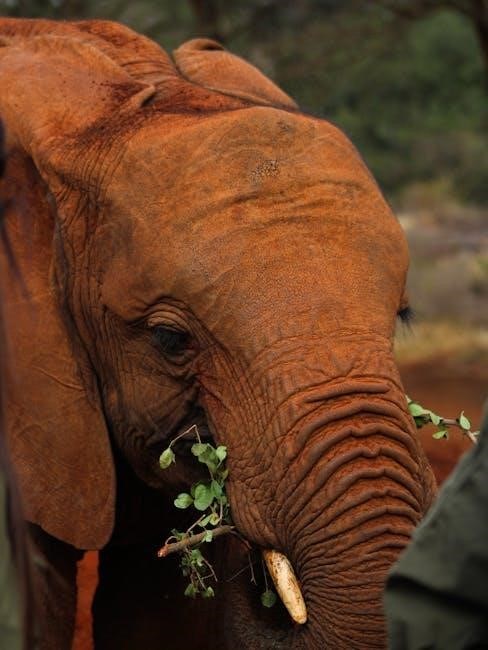
Questions frequently assess understanding of competition with other herbivores for grazing lands‚ particularly during dry seasons. PDFs may include data sets showing correlations between population densities of elephants and other species. Assessments test the ability to differentiate between density-dependent and density-independent biotic factors influencing elephant population dynamics.
Case Study: Tsavo National Park‚ Kenya
Answer key PDFs utilizing Tsavo National Park as a case study emphasize the interplay of abiotic and biotic factors impacting elephant populations. Assessments present data from Tsavo surveys‚ requiring students to interpret population trends and identify limiting factors specific to the region. PDFs detail Tsavo’s history of poaching and its subsequent impact on age structure and genetic diversity.
Questions focus on analyzing maps illustrating elephant herd distribution in relation to water sources and vegetation cover. PDFs often include scenarios related to human-elephant conflict in Tsavo‚ prompting students to propose mitigation strategies. Assessments evaluate understanding of how drought conditions exacerbate competition for resources within the park’s ecosystem.
The Role of Genetics in Elephant Population Health
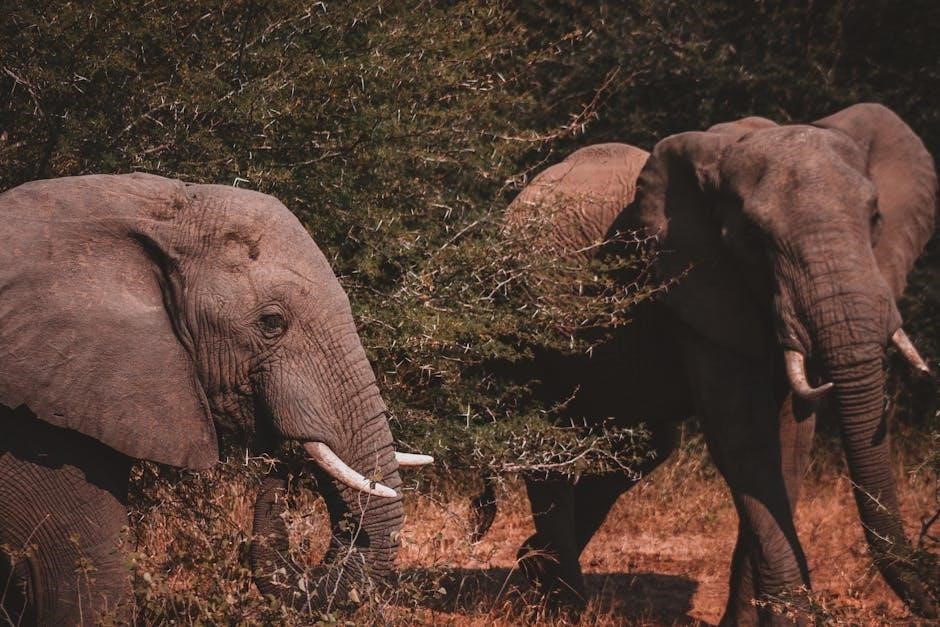
Answer key PDFs highlight how genetic diversity influences a population’s resilience to disease and environmental changes within elephant herds. Assessments often present scenarios exploring the impact of poaching on genetic bottlenecks‚ reducing gene flow and adaptive potential. PDFs detail the selection for tusklessness in Tsavo‚ framing it as an evolutionary response to intense ivory poaching pressure.
Questions within PDFs may require students to interpret data related to allele frequencies and heterozygosity. Assessments evaluate understanding of how inbreeding depression can manifest in elephant populations with limited genetic variation. PDFs emphasize the importance of genetic monitoring for effective conservation management‚ ensuring long-term population viability.
Human-Elephant Conflict and its Impact on Populations
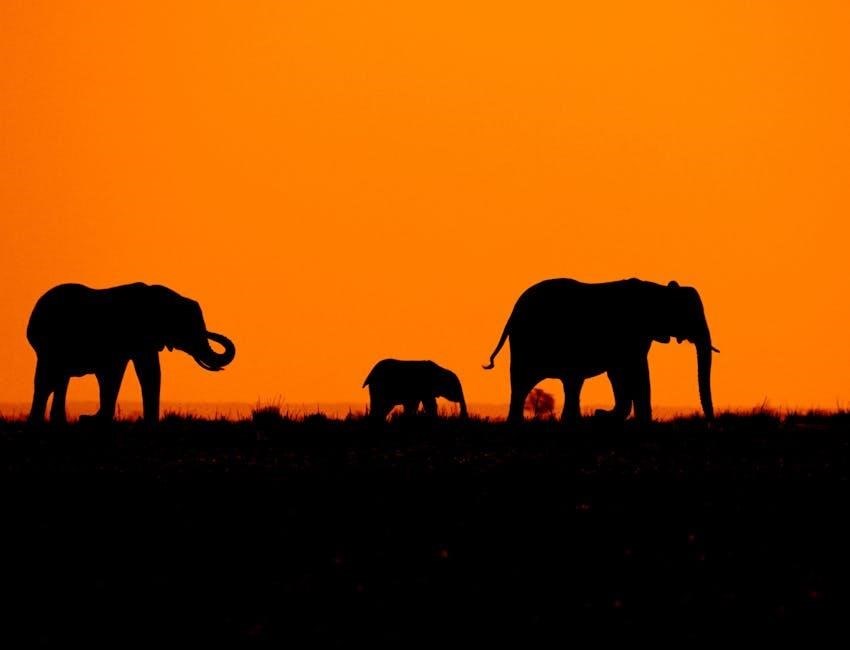
Answer key PDFs frequently address human-elephant conflict (HEC) as a significant driver of elephant population decline‚ presenting case studies like those found in Tsavo National Park. Assessments explore the root causes of HEC – competition for land and resources – and its consequences‚ including retaliatory killings. PDFs often include data on crop raiding incidents and human casualties.
Questions within PDFs may require students to analyze the effectiveness of mitigation strategies‚ such as electric fences or chili fences. Assessments evaluate understanding of the socio-economic factors contributing to HEC and the need for community-based conservation approaches. PDFs emphasize the importance of addressing HEC to ensure the long-term coexistence of humans and elephants.
Conservation Strategies for Elephant Populations
Answer key PDFs detail diverse conservation strategies‚ emphasizing anti-poaching measures and habitat preservation as crucial components. Assessments often focus on the role of international collaborations and treaties‚ like CITES‚ in regulating ivory trade. PDFs present data on the effectiveness of protected areas – national parks and reserves – in safeguarding elephant populations.
Questions within PDFs may require students to evaluate the impact of community-based conservation initiatives and the importance of mitigating human-elephant conflict. Assessments explore strategies like corridor creation to connect fragmented habitats. PDFs highlight the need for genetic diversity within populations and the role of research in informing conservation efforts‚ ensuring long-term survival.
Understanding Answer Key Components in Assessment Materials
Answer key PDFs for elephant population assessments typically include detailed explanations for identifying limiting factors – both abiotic (water scarcity‚ climate change) and biotic (poaching‚ predation). Keys often present correct responses regarding population trends observed in case studies‚ like Tsavo National Park‚ Kenya.
PDFs clarify the interpretation of data from aerial surveys‚ dung counts‚ and camera trap results. Assessment keys demonstrate how to analyze population density maps and correlate them with environmental variables. Keys also explain the significance of genetic data in assessing population health and evolutionary responses‚ such as selection for tuskless elephants‚ as highlighted by the Great Elephant Census.
Interpreting Data from Population Census Numbers
Answer keys accompanying population census data emphasize identifying significant population declines‚ as seen historically with African elephants. PDFs guide students in listing potential factors contributing to these decreases – drought being a critical example‚ impacting survival rates.
Keys demonstrate how to correlate census numbers with environmental changes and human activities like poaching and habitat loss. Assessment materials explain how to analyze population density maps‚ pinpointing areas of concentration or decline. PDFs also illustrate interpreting data from the Great Elephant Census‚ focusing on threats and estimating population sizes‚ ultimately informing conservation strategies.
Addressing Drought as a Limiting Factor
Answer keys within PDF assessment materials highlight drought as a primary abiotic limiting factor for elephant populations. They detail how reduced water availability directly impacts elephant survival‚ leading to increased mortality‚ particularly among calves. PDFs guide students to describe drought’s effects‚ linking it to decreased reproductive rates and increased competition for scarce resources.
Assessment materials emphasize analyzing census data to identify correlations between drought events and population declines. Keys demonstrate how to evaluate the impact of drought on elephant distribution‚ prompting consideration of migration patterns and access to remaining water sources. Understanding this link is crucial for effective conservation planning.
Selection for Tuskless Elephants – Evolutionary Response
PDF-based answer keys illustrate how intense poaching for ivory drives an evolutionary response: increased frequency of the tuskless phenotype in elephant populations. Assessment materials explain that elephants without tusks have a higher survival rate in areas with heavy poaching pressure‚ as they are less targeted.
Keys guide students to interpret data showing the rising percentage of tuskless elephants‚ particularly in heavily poached regions like Mozambique. They emphasize this isn’t random‚ but natural selection in action. PDFs often include questions about the genetic basis of tusklessness and its implications for long-term population viability‚ demonstrating adaptive evolution.
Future Directions in Elephant Population Assessment and Conservation
Answer key PDFs highlight emerging technologies for improved monitoring‚ moving beyond traditional aerial surveys. These include refined DNA analysis from dung samples for accurate population counts and genetic diversity assessments. Assessment materials emphasize the growing role of satellite tracking and real-time data analysis to combat poaching effectively.
PDFs also showcase the importance of integrating socio-economic factors into conservation strategies‚ addressing human-elephant conflict. Future assessment will likely focus on predictive modeling to anticipate population shifts due to climate change and habitat loss. Keys will test understanding of collaborative conservation efforts and adaptive management approaches.